Plan a REST API Integration That Works After the Demo
Connect two business systems with a clear plan for access, field mapping, missing records and failed requests. Know what to ask a developer to build and test.
A developer shows one successful API request. The real job starts when the connection must run every day, handle more records and recover after a problem. A REST API integration uses supported requests to read or change information in another system. Define the business result first: for example, create one booking or update one customer, without losing changes or making extra copies.
Things to check first
- Confirm both vendors offer the API actions your process needs on the plans you have. Read access does not prove that booking or updating is supported.
- Write down the starting event, source record, destination and expected result. Note which system owns each field.
- Ask about a sandbox, test account or made-up record. Confirm the permitted way to test before touching live bookings, payments or messages.
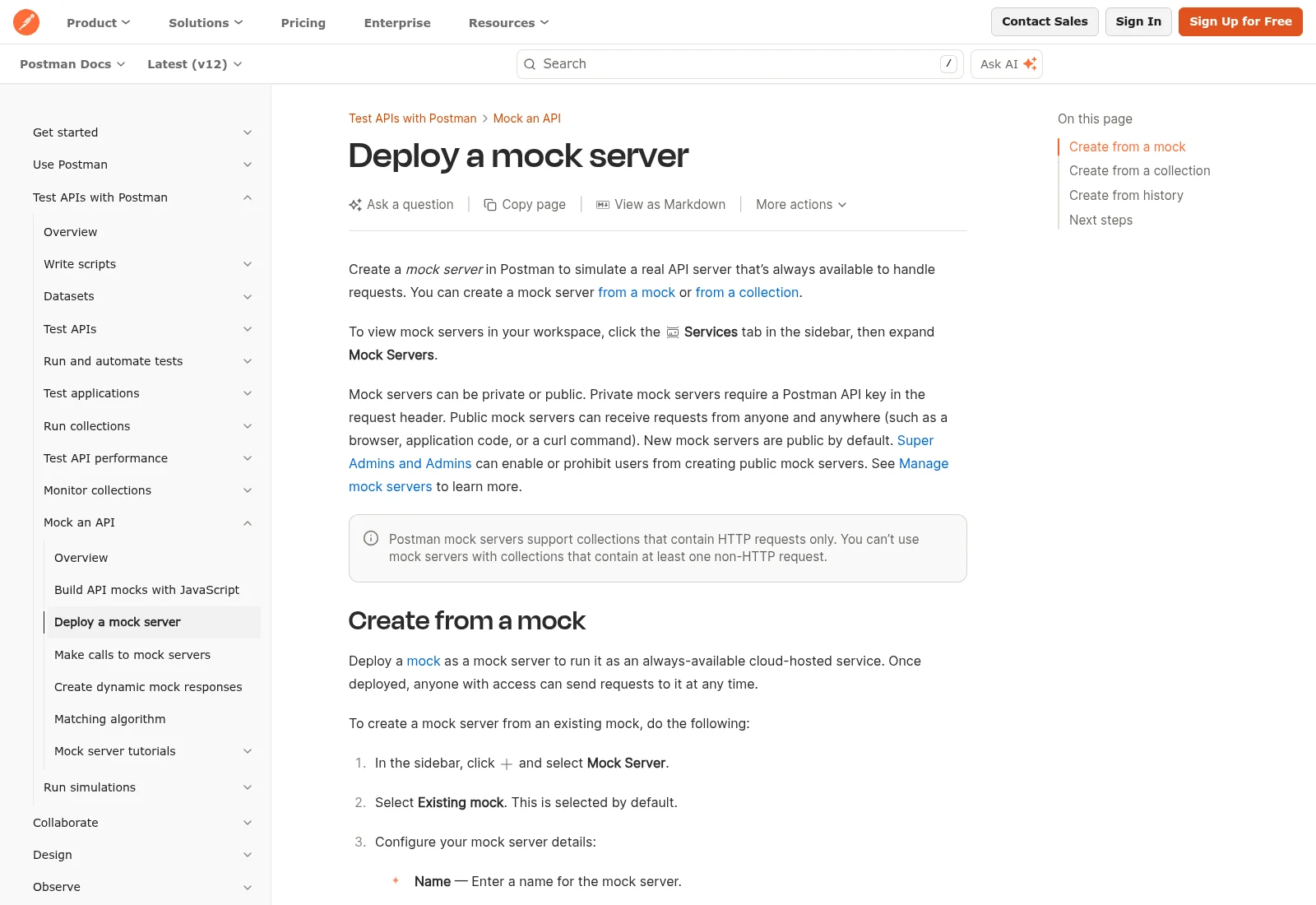
A mock helps test how your app reacts to a delay or error. It cannot prove a real booking saved. This is Postman’s mock-server documentation; the test also needs a controlled destination check.
Documentation screenshot: Postman. Example screen; yours may look different.Define the awkward cases before the build
Your first brief should name the fields, matching IDs and update direction. Ask how the connection will handle optional fields, deleted records and a record edited by someone else. “Sync everything” leaves too much undecided.
Check how the vendor returns long lists of records. Many APIs return pages of results. A demo that reads the first page can look successful while missing most of the data. Rate limits and retry instructions also vary by vendor.
Plan ownership, costs and recovery
Agree where the code will run, who controls that account and who sees a failed request. A personal laptop or the freelancer’s private hosting account needs an explicit long-term plan.
After an uncertain write, the connection should check whether it saved before trying again. Agree how repeated requests are recognized. Keep access keys out of source code, screenshots and shared briefs; use the hosting provider’s supported secret storage.
What to ask the freelancer to do
- Write the API connection plan
- Build the agreed requests and failure handling
- Test and hand over the running connection
Questions to ask before hiring
- What proves a write succeeded before you retry it?
- Where will this run, and who owns the code and hosting account?
- How will you test paged records, limits and failed permissions?
Red flags
- Quotes before reading either API’s documentation
- Stores live keys in a shared code file
- Calls one successful request a complete integration
Agree what the job includes
- Write a short specification for the supported actions, IDs, field rules and permission limits. Include the vendor documentation used.
- Build the agreed connection with failure logs that avoid private payloads and secrets. Include sensible handling of paged results and vendor limits.
- Run representative tests and hand over the code, setup instructions, running costs and recovery steps. Agree the license and maintenance owner.
What to send the freelancer
- Share both API documentation links, account tiers and made-up request/response examples. Do not paste working keys into the brief.
- List data volume, timing, required fields and what should happen if either service is unavailable.
- Agree test access, who approves live writes and how to restore the previous process if the release fails.
How to check the work is done
- The agreed records are created or updated correctly once, including a sample beyond the first result page.
- Missing data, an expired credential, a rate limit and an uncertain save have an explainable outcome. No blind duplicate write is accepted.
- The team can deploy, pause and troubleshoot the connection using the handover. Ownership and any ongoing charges are written down.
What may cost extra
- An API cannot add vendor features or access rights that your account does not support.
- A new app, old-data cleanup and additional business processes need a separate quote.
Sources checked 2026-10-24
- Best practices for using the REST API - GitHub Docs
- Best practices for using the REST API - GitHub Docs
Use this guide to agree the work and check the result.
Common questions
Does a successful Postman test prove the integration is ready?
No. It proves that particular request worked under those test conditions. The running connection still needs access, field, failure and repeat-request checks.
Can we build a connection without a sandbox?
Sometimes, but the vendor must permit a controlled test method. Use made-up records, limit writes and agree cleanup and approval before testing live systems.
More help: Source 1
Find help on Fiverr
Ready to hand it over? This freelancer offers help with the job covered in this guide. Look at their work and send them your brief to get a quote.
Stas Sorokin
@stas4000 · FiverrREST API integration builds
The listing covers API integrations and custom API work. Agree the specific systems, endpoints and hosting before ordering.
Listing checked October 24, 2026: 58 reviews, 4.8/5 displayed. Visible reviews included work delivered within the last month.
Before you hire: Ask for sandbox tests, safe retry handling and a clear handover. Confirm code rights and ongoing hosting costs.
View service on Fiverr ↗Listing checked 2026-10-24. We have not hired this freelancer or tested their work.
Build my freelancer brief
Answer a few questions to make a clear job description you can send to a freelancer.